I lost a night of sleep recently, while worrying over a conversation I knew needed to happen in the morning. I didn't know how my words would be received. So instead of taking it to God, I took it to the ceiling. Hour after hour, running scenario after scenario through my head, I imagined how I’d react to the worst-case outcomes.
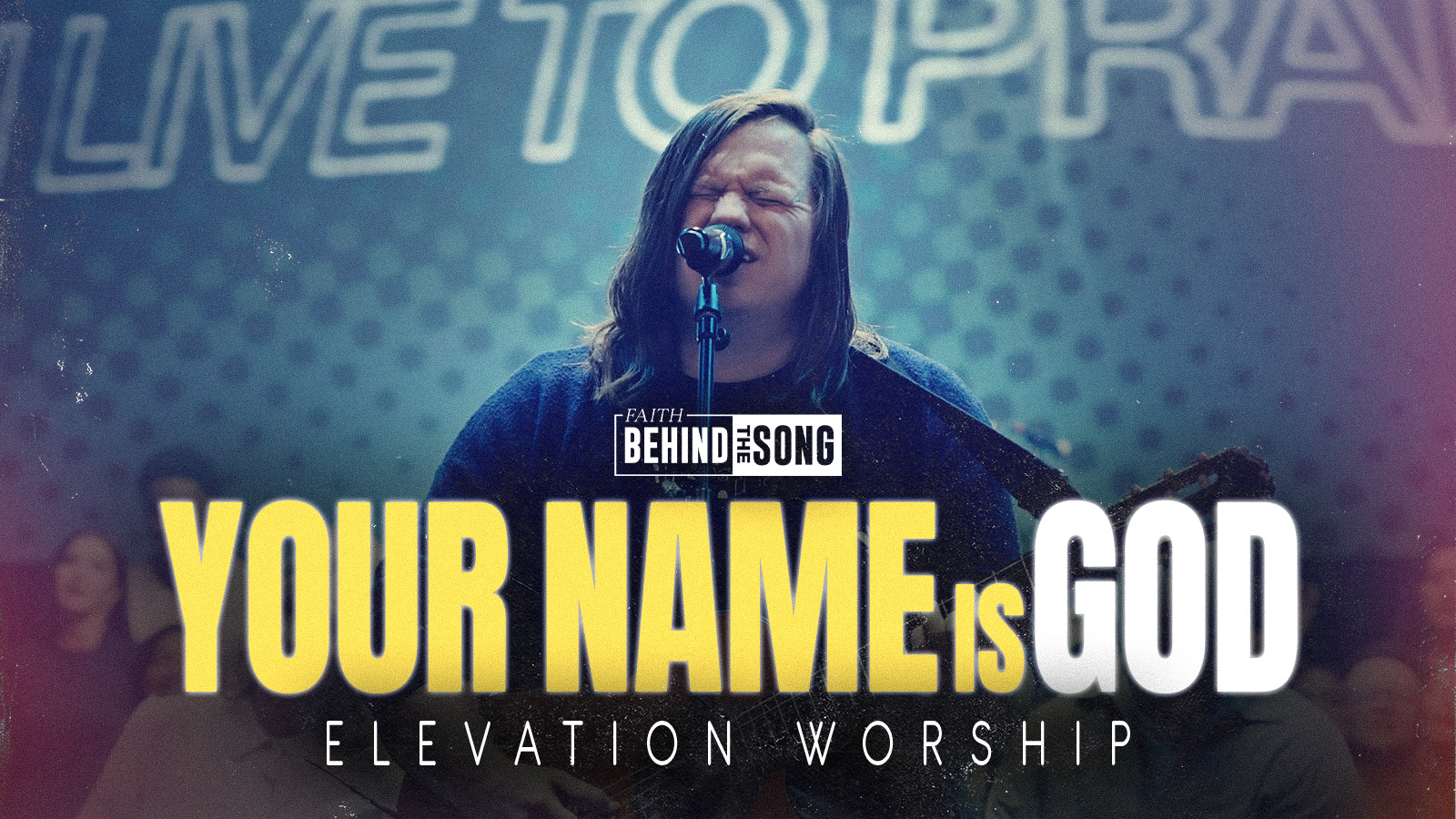
A few weeks later, I was listening to Elevation Worship’s "Your Name Is God" (including some amazing vocals from Leeland Moring), when one section stopped me cold.
“Your Name is God, no one else beside
El Shaddai, if You don't worry, why should I?
Your Name is God, Author of my life
I'm trusting in Your Name, God, 'til the day I die”
If God wasn’t worried, why was I? Despite all of the scenarios and questions I’d considered while tossing and turning, that question was never considered.
Many worship songs about anxiety take a similar path. They tell you to stop worrying. But “Your Name is God” doesn't bother with that instruction. It skips straight ahead and hands you a name instead. A name that can bring peace to a storm!
That's a different approach than worry offers. Worry tells you to solve the feeling first and trust God later, once things calm down. The song works backward. Trust God now and let the feeling catch up later.
That night, I wasn't just looking for a reason to feel better. I was looking for a reason to believe that God had that conversation, so I could surrender to sleep.
What El Shaddai actually means
The name “El Shaddai” shows up first in Genesis 17. Abraham is ninety-nine years old and still childless. He’s clinging to a promise that hasn't caught up to his circumstances yet. There, God introduces Himself with this name, right in the middle of Abraham’s waiting.
“El Shaddai” gets translated a few different ways. God Almighty is a common one. Some scholars trace the root to a word for mountain, while others identify the root of the word for breast. Here, we have an image of God as the One who sustains and provides everything a person needs to survive. Whichever way you land, the meaning underneath points to the same reality. In God, we find total sufficiency with nothing lacking.
That's what I was tossing and turning over. I didn’t need to call God powerful in a general or abstract sense. I needed to trust His power in one very specific area.
What Scripture says about the trade we're making
Paul writes it plainly in Philippians 4:6-7. "Don't worry about anything; instead, pray about everything. Tell God what you need, and thank him for all he has done. Then you will experience God's peace, which exceeds anything we can understand" (NLT). Notice the order in Paul’s command. Peace isn't the prerequisite for prayer. Peace is what prayer produces.
Jesus makes a similar move in Matthew 6:27, asking a question worth sitting with. "Can all your worries add a single moment to your life?" (NLT). Worry cannot add to our lives. It can only steal moments that God gifts.
Your worry has set you up well
Rick Warren has a quote that I’ve shared with my church when I’ve taught about worry. “When you think about a problem over and over in your mind, that's called worry. When you think about God's Word over and over in your mind, that's meditation. If you know how to worry, you already know how to meditate.”
Does that quote describe you? I'm good at worry. I can run a scenario in countless ways, getting my brain going so much that sleep becomes impossible.
That's what I was actually doing that night with the ceiling. I wasn’t just feeling anxious. I was planning a contingency for a future where God didn't come through, and I'd be the one left to handle it myself. Worry isn't really about the outcome. It's about who will be in charge of fixing it if things fall apart.
Worry is the absence of trust and a desire for control. I choose to start managing the future on my own because some part of me isn't convinced God will. Now, nobody says that quiet part out loud. It feels vulnerable to put that in words. But that's the belief underlying my worry, and El Shaddai confronts it directly. “Scott, I have this. So you don't need a backup plan. Focus on who I am and what I’ve promised you.”
Where this leaves you
I woke up the next morning, exhausted. I had the conversation, for what it's worth. It went surprisingly well, though my exhaustion made me more emotional than I expected. I spent a whole night bracing for something I could've handed over to God instead.
El Shaddai isn't a title God picked to impress us. He chose it so that Abraham, you, and I would know that we don't have to build backup plans. God is already sufficient for whatever comes next.
If something has been keeping you up lately, I encourage you to reflect on this question. What are you quietly planning for, even though part of you doubts God will show up?
Name that doubt. Hand it back to El Shaddai, and then listen to “Your Name is God.” Choose to meditate on His character and commitment to you, rather than meditating on worst-case scenarios.
Scott Savage is a pastor, author, and speaker who loves tacos, matcha, and sneakers. Scott's writing has impacted over eight million readers through trusted platforms such as the YouVersion Bible App, Air1 Radio, and Our Daily Bread. Whether speaking on a stage or writing on a page, he offers a steady, empathetic voice that reassures people they are seen, loved, and not beyond God's healing reach. He’s the author of Faith Behind The Song, a new devotional book published by K-LOVE Books. Subscribers from over fifty countries are excited to read his free newsletter every Tuesday morning. You can join that list today at ScottSavageLive.com.