Update:
CAIRO (AP) — President Donald Trump said Monday that the American military had begun a blockade of Iranian ports as part of his effort to force Tehran to open the Strait of Hormuz and accept a deal to end the war that has raged for more than six weeks.
Iran responded with threats on all ports in the Persian Gulf and the Gulf of Oman, taking aim at U.S.-allied countries.
That set the stage for an extraordinary showdown that posed serious risks for the global economy and raised the specter that the ceasefire could collapse and the war could resume. Talks aimed at permanently ending the conflict — which began Feb. 28 with U.S. and Israeli strikes on Iran — failed to reach an agreement this past weekend. There has been no word on whether negotiations will resume.
Trump says the blockade has begun
In Washington, U.S. President Donald Trump said the blockade started at 10 a.m. EDT (2 p.m. GMT).
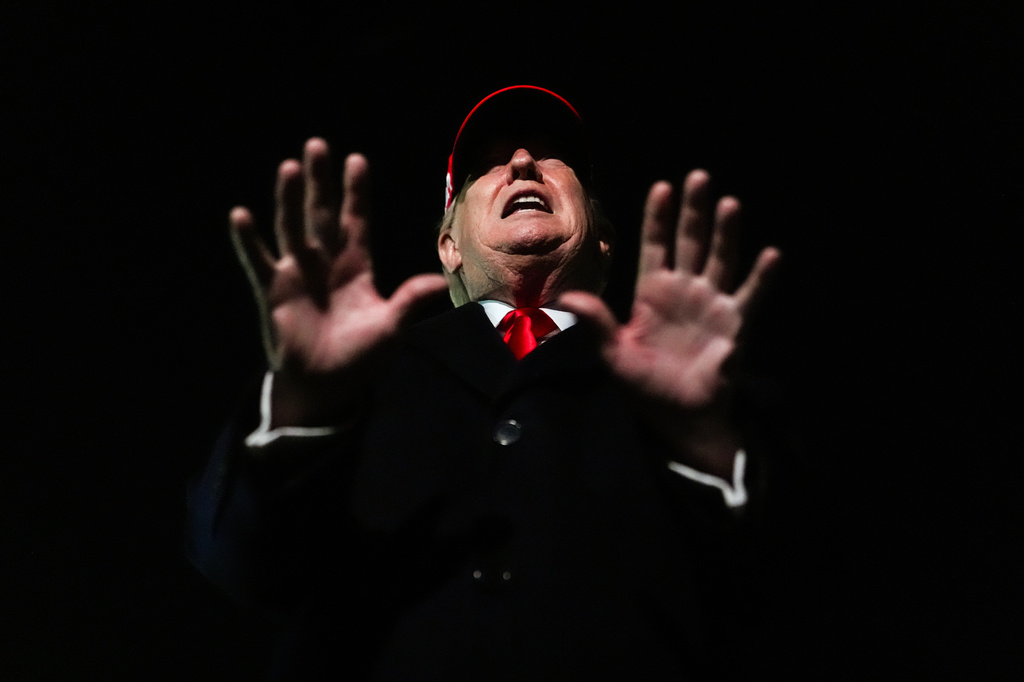
“We can’t let a country blackmail or extort the world because that’s what they’re doing,” Trump said of Iran.
Speaking outside the Oval Office, Trump suggested the U.S. is still willing to engage with Iran.
“I can tell you that we’ve been called by the other side,” Trump said.
He added: “We’ve been called this morning by the right people, the appropriate people, and they want to work a deal.”
Trump did not say who called or what was discussed.
Minutes before the scheduled start of the blockade, the United Kingdom Maritime Trade Operations agency issued a notice to mariners that said the restrictions included “the entirety of the Iranian coastline, including ports and energy infrastructure.”
It added that transit through the strait “to or from non-Iranian destinations is not reported to be impeded by these measures,” but added that ships “may encounter military presence” in the strait.
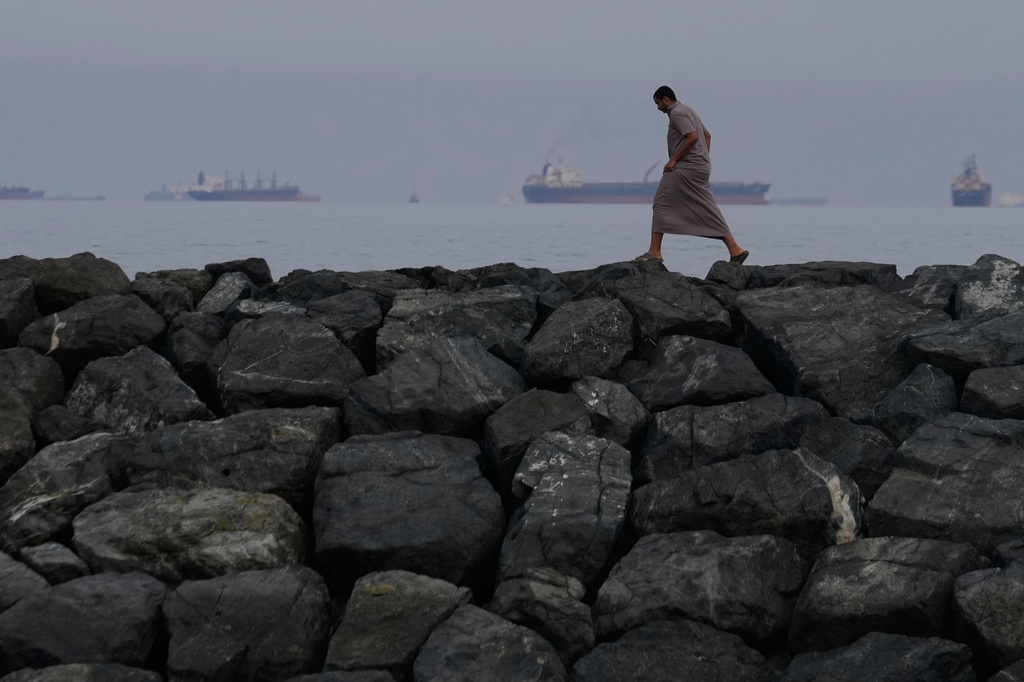
Iran’s effective closure of the strait, through which 20% of traded oil passes in peacetime, has sent oil prices skyrocketing, pushing up the cost of gasoline, food and other basic goods far beyond the Middle East. Tehran has allowed some ships perceived as friendly to pass while charging considerable fees, leading to accusations it is holding the global economy hostage.
Some analysts are doubtful that the U.S. can restore normal shipping through force alone — and it’s not clear how a blockade would work or what the dangers might be to U.S. forces.
The question is essentially who can endure the most pain: Could a blockade make Iran’s economic situation untenable and force it to concede? Or will it drive global oil and other prices so high that Trump is forced to back down?
Blockade could have far-reaching effects
The U.S. military's Central Command announced that the blockade would be enforced “against vessels of all nations entering or departing Iranian ports and coastal areas.” It said that would include all of Iran’s ports on the Persian Gulf and Gulf of Oman.
CENTCOM's decision to allow ships traveling between non-Iranian ports to transit the strait was a step down from Trump’s earlier threat to blockade the waterway.
In a social media message posted shortly after the blockade was due to begin, Trump said Iran’s navy was “laying at the bottom of the sea, completely obliterated,” but he added that Tehran still has “fast attack ships,” and warned that “if any of these ships come anywhere close to our BLOCKADE, they will be immediately ELIMINATED."
Iran issued threats of its own.
“Security in the Persian Gulf and the Sea of Oman is either for everyone or for NO ONE,” the Islamic Republic of Iran Broadcasting reported Monday. “NO PORT in the region will be safe,” read a statement from the Iranian military and the Revolutionary Guard.
The threats halted the limited ship traffic that resumed in the strait since the ceasefire, according to a report from Lloyd’s List Intelligence. Marine trackers say over 40 commercial ships have crossed since the start of the ceasefire last week, down from roughly 100 to 135 vessel passages per day before the war.
The blockade is likely intended to pile pressure on Iran, which has exported millions of barrels of oil since the war began, much of it likely carried by so-called dark transits that evade Western sanctions and oversight.
But the effects will be felt far beyond Iran. The price of Brent crude oil, the international standard, rose 7% to hover around $102 per barrel on Monday. It cost roughly $70 per barrel before the war.
British Prime Minister Keir Starmer said that, together with French President Emmanuel Macron, he would hold a summit this week "to drive forward the international effort” to end the conflict and unblock the strait.
(AP) - The U.S. military announced it will begin a blockade of all Iranian ports and coastal areas on Monday, tempering U.S. President Donald Trump’s previous vow to entirely block the strategic Strait of Hormuz, as early reports indicated that ships had stopped crossing the waterway.
However, Trump warned on social media that any Iranian warships that come “anywhere close” to the U.S. blockade will be destroyed. It wasn’t clear whether the blockade had started by the designated time of 10 a.m. EDT.
The move sets the stage for a showdown as Iran has responded with threats against ports in the Persian Gulf and the Gulf of Oman. The war, now in its seventh week, has killed thousands of people and shaken global markets. Ceasefire talks between the U.S. and Iran over the weekend ended without an agreement, raising questions about what happens when the current two-week truce expires on April 22.
Meanwhile, the Israeli military is pushing ahead with its air and ground offensive in southern Lebanon, engaging in fierce fighting with Hezbollah militants over a strategic town while the group also fires rockets and drones at northern Israel.
Trump says Iranian ships that come ‘anywhere close’ to US blockade will be destroyed
The president made the comment on social media just after the blockade of Iran was expected to begin. Trump said Iran has some “fast attack ships” remaining even after much of its navy was destroyed by U.S. strikes.
“Warning: If any of these ships come anywhere close to our BLOCKADE, they will be immediately ELIMINATED, using the same system of kill that we use against the drug dealers on boats at Sea,” Trump wrote on his Truth Social platform.
He added: “It is quick and brutal.”
Where things stand on ceasefire talks
The current truce between the U.S. and Iran appears to be holding, with no word on whether negotiations will resume before it expires on April 22.
Pakistan’s foreign minister, Ishaq Dar, said his country will try to facilitate a new round of dialogue between Iran and the U.S. in the coming days. There was no immediate reaction from either side.
A key obstacle seems to be a perception on both sides that they won the war and that each has time on its side.