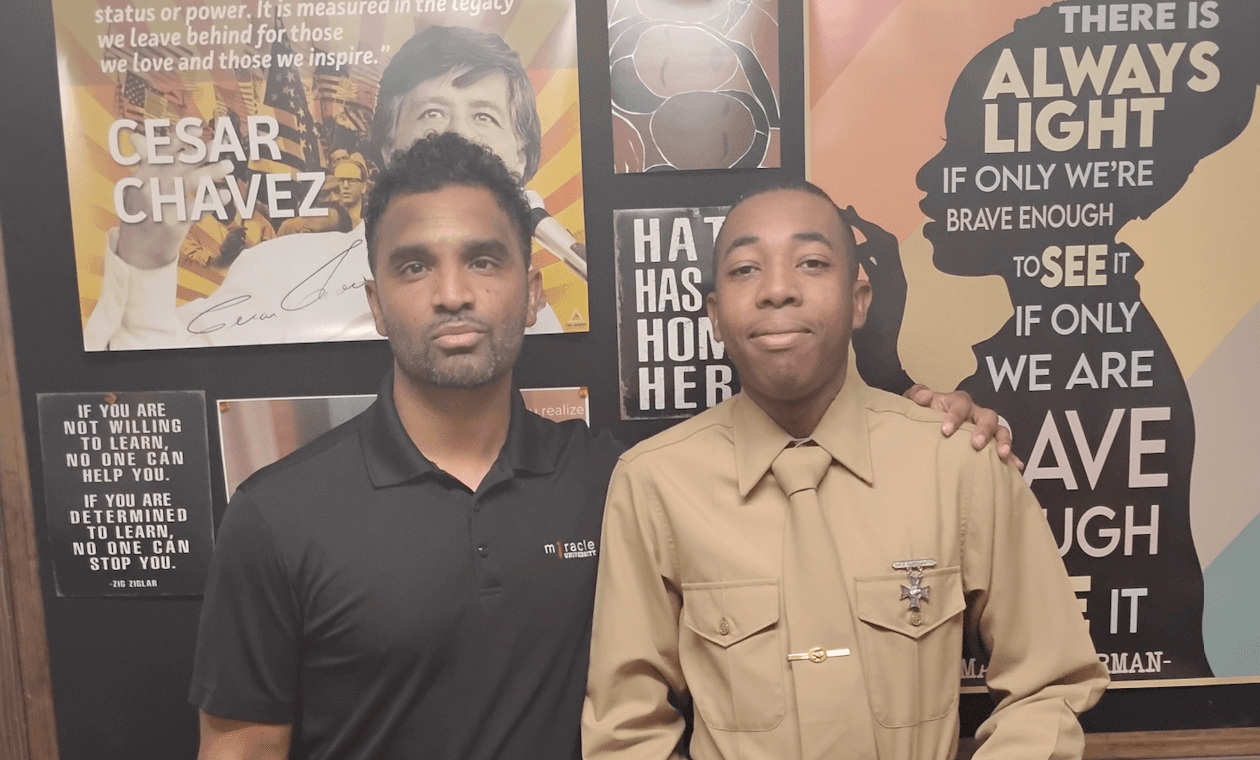
(Sacramento, CA) In a city where nearly 4,000 students drop out of high school each year, one educator refuses to accept that statistic as inevitable.
Today’s conversation is one of hope, perseverance, and what can happen when somebody refuses to give up on the next generation. At the center of that movement stands Dr. Kadhir Raja, founder of Miracle University—a school created for at-risk students who were once told they weren’t smart enough, disciplined enough, or capable of succeeding.
Dr. Raja believed differently.
In Sacramento County alone, thousands of teenagers are pushed out of the traditional school system each year—labeled as failures, written off as dropouts. But the consequences ripple far beyond the classroom.
According to Dr. Raja, roughly 80% of incarceration rates, violent crime, homelessness, and even sex trafficking victims are tied to the high school dropout crisis. When a child drops out, the entire community feels the impact.
“Every child is a miracle,” Dr. Raja says. “Every child has dignity. Every child has a purpose.”
That conviction became the foundation of Miracle University—a nonprofit dropout prevention movement based in Sacramento with one bold goal: end the dropout crisis.
What makes Dr. Raja’s story especially powerful is that he wasn’t always a high achiever.
As a child, he repeatedly failed state standardized exams. He was labeled special education. In seventh grade, algebra nearly pushed him out of school entirely.
“It felt like a foreign language,” he recalls. “I was failing English—and now I had A, B, C, X-squared, Y-squared?”
It was his mother who refused to let him quit. Through creativity and prayer, she reimagined algebra in ways he could understand—turning variables into dogs, equal signs into bridges, equations into stories.
That breakthrough lit a fire.
Years later, after teaching in Deep East Oakland and transforming the lives of students labeled as gang members, failures, and dropouts, Dr. Raja was named Sacramento County Teacher of the Year in 2010 and California State Teacher of the Year in 2011—recognized among roughly 400,000 educators.
At the White House, he met then–U.S. Secretary of Education Arne Duncan, who challenged him to “clone the miracle” nationwide—make it impossible for children to drop out.
That challenge became a calling.
Miracle University is not just another alternative school. It’s a holistic transformation system built around five core pillars:
1. Miracle Mentors
Every student is paired with a mentor who is “called to serve.” These mentors go far beyond academics—they check attendance daily, visit homes, meet students in homeless encampments, speak multiple languages, and build deep, consistent relationships.
Ninety percent of Miracle students are in foster care, experiencing homelessness, or on probation. Mentors function like “Navy SEALs of education”—relentless, compassionate, and unwavering.
Failure is not an option.
2. The CREATE Teaching Model
Dr. Raja developed a model called CREATE during his time as Teacher of the Year. Teachers are trained to personalize instruction and teach in the way the student understands—not the way the teacher prefers.
The result? Engagement replaces frustration.
3. Real-World Internships
Every student participates in a personalized internship—welding, robotics, nursing, cosmetology, construction, gaming, and more. Students see the relevance of school to their future, often shadowing professionals across the city.
Purpose fuels performance.
4. A Safe Environment
Located in downtown Sacramento within Praise Church, Miracle University provides a peaceful, fight-free campus. Many students transfer from schools where they felt unsafe or invisible. Here, they feel seen, known, and valued.
5. Miracle Parent University
Families are brought into the journey. Parents can attend workshops, earn their GED, and receive tools to better support their children’s success.
Miracle University unapologetically weaves biblical principles into mentorship and curriculum—grace, stewardship, sovereignty, righteousness, and purpose.
Students from Christian backgrounds and students from other faith traditions alike are invited into conversations about identity, transformation, and hope.
“Once you unlock the spirit,” Dr. Raja explains, “the grades and graduation will follow.”
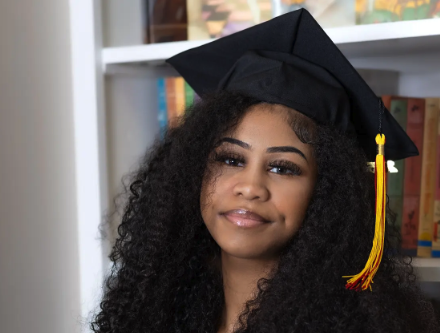
Sophia Nunez was a 16-year-old sophomore failing school in North Sacramento. Health challenges, safety concerns, and a lack of connection with adults left her disengaged and ready to drop out.
She felt invisible.
After transferring to Miracle University, Sophia was paired with a mentor who refused to let her give up. Within a year, she graduated early at 17½. Through a specialized internship at California Northstate University, she trained as a nursing assistant.
Today, she earns approximately $60,000 per year—helping support her family.
Her two siblings followed her to Miracle University and are now on track to graduate as well.
Sophia’s story is not an exception. It’s one of hundreds.
Since launching two years ago, Miracle University has served 300 students—all previously labeled dropouts.
All 300 graduated.

Yet more than 2,000 students remain on the waiting list.
As a private school, Miracle University does not receive public funding. While traditional public schools receive more than $15,000 per student annually, Miracle operates at under $5,000 per student—relying on donors and tuition assistance to sustain operations.
The challenge is not the model.
The challenge is resources.
Dr. Raja’s vision is audacious: by 2030, there will be zero dropouts in Sacramento County.
If that goal is achieved, the ripple effect could mean reduced incarceration, less homelessness, lower crime rates, and a stronger local economy.
“Everybody wins if we end the dropout crisis,” he says.
And perhaps that is the heart of Miracle University: a refusal to accept labels, a refusal to surrender the next generation, and a belief that transformation is possible when someone decides to stand in the gap.
Because when one educator dares to believe every child is a miracle, failure becomes impossible.