
For 37 years, Pam McConnell built a remarkable career at Nike, starting as an administrative assistant when the company was still young and eventually rising to vice president.
But ask McConnell today about the defining story of her life, and she does not begin with Nike, the title she held or the success she achieved.
She begins with God.
“My God story is that He was there when others were not,” McConnell told K-LOVE's Crystal Thornton.
It is a testimony forged through years of extraordinary loss and one that has transformed the way she sees people who are hurting.
McConnell says her relationship with Jesus became deeply personal in 1985, just seven months into her marriage. Raised Catholic, she had walked away from church for a time before returning and encountering Christ in a way she says changed the trajectory of her life.
“I accepted Jesus, and my husband wasn’t saved yet, and I couldn’t deny that I had a Holy Spirit experience,” she recalled. “My whole trajectory was with Jesus.”
Years later, that faith would be tested in ways she could never have imagined.
Her husband became seriously ill and suffered for six years before he died.
For some, pain of that magnitude can create distance from God. For McConnell, it drove her closer.
“Hanging onto my faith is the only thing that got me through,” she said. “I hung onto Him for dear life, and He was there.”
And the losses did not stop.
A couple of years after her husband died, McConnell lost her eldest daughter. Then came the deaths of other family members, wave after wave of grief that left McConnell and her children struggling to understand why so much loss had come into their lives.
There were moments when even she wondered where God was.
But looking back, she says she can now see His presence threaded throughout the pain.
“He held me up, helped them up and carried us through,” she said.
Listen to our entire conversation with Pam McConnell in the podcast below.
The Knock at the Door
Sometimes, McConnell says, the love of God arrived through something as simple as a person willing to sit beside her.
The morning her husband died, his body had been taken away and her children had gone to sleep. McConnell sent her best friend home, insisting she would be all right.
She wasn’t.
“I didn’t even know how okay I wasn’t,” she remembered.
Then came a knock at the door.
Standing outside was her friend Howard White, the longtime Nike executive whose role in the pursuit of Michael Jordan was later portrayed in the film “Air.”
McConnell looked at him and asked what he was doing there.
His answer was simple.
“I just thought you didn’t want to be alone.”
White came inside and sat with her.
He did not interrogate her about her husband’s final moments. He did not try to find the perfect words. When McConnell wanted to speak, he listened. When she needed to grieve, he simply remained.
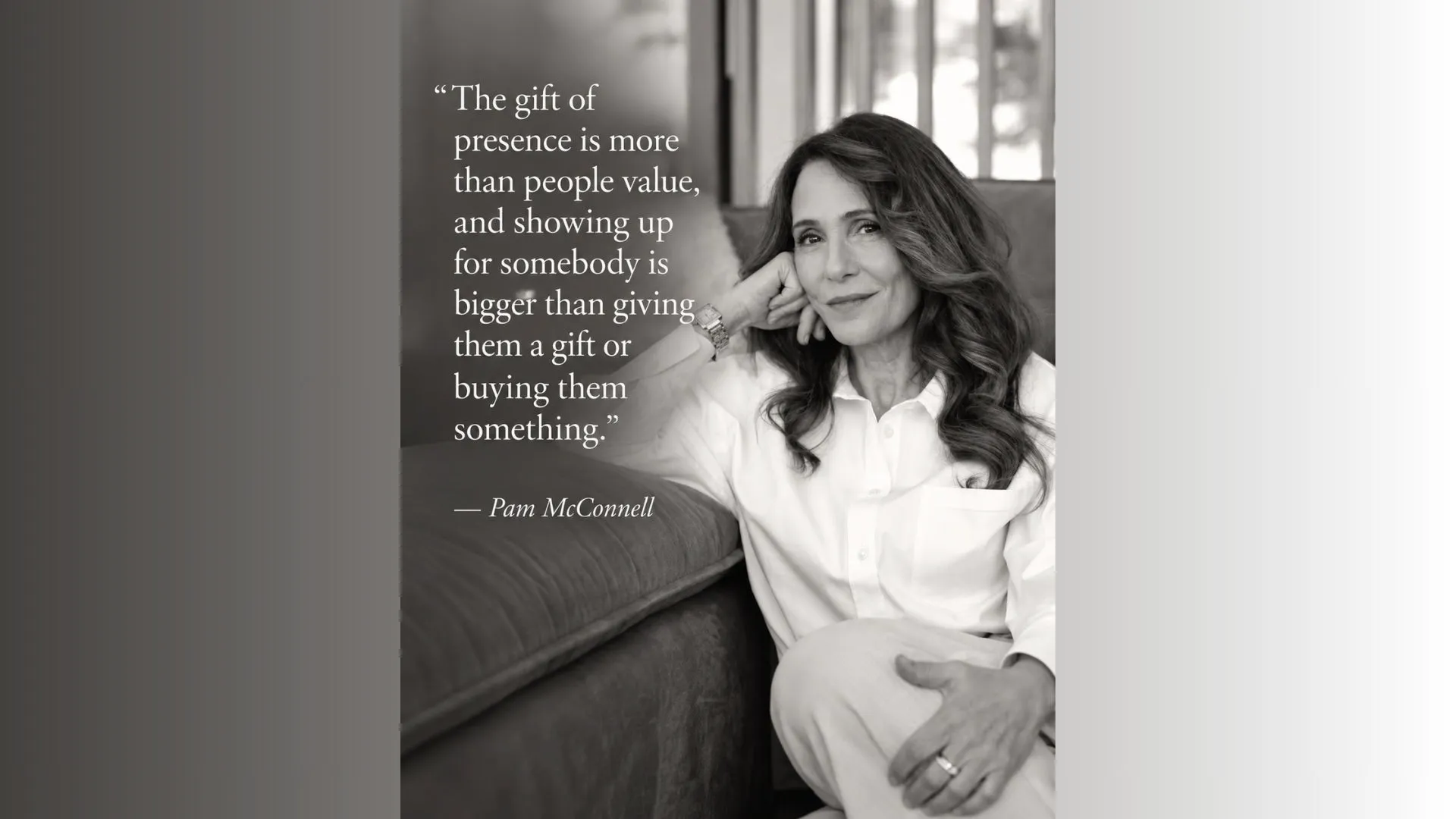
“The gift of presence is more than people value,” she said. “Showing up for somebody is bigger than giving them a gift or buying them something.”
That morning changed something in her.
Had White called and asked whether she needed him, McConnell believes she probably would have said no.
The truth was, she did not know what she needed.
He did.
More Than “If There’s Anything I Can Do”
McConnell began noticing how often grieving people hear one well-intentioned phrase:
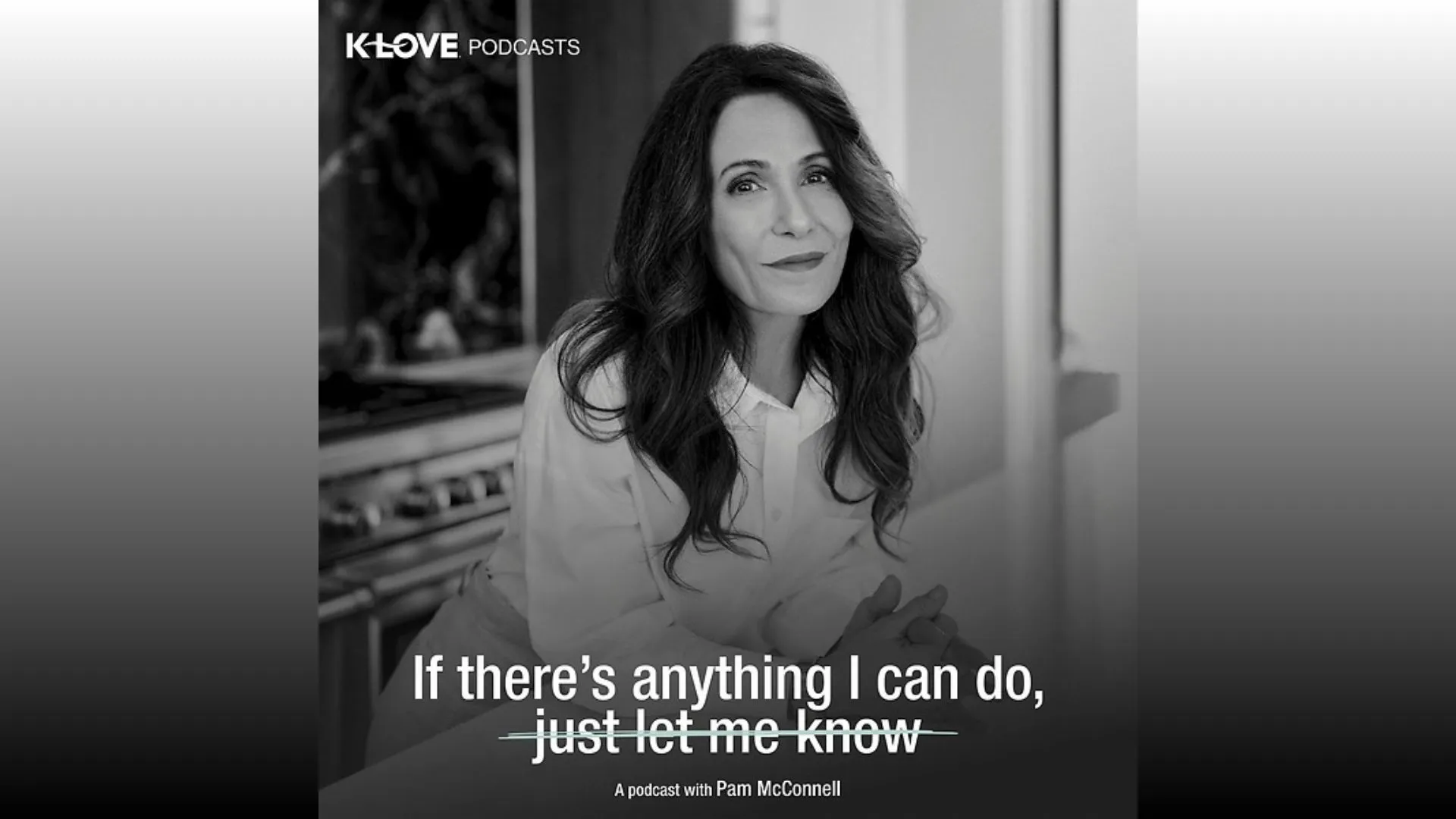
“If there’s anything I can do, just let me know.”
She had seen it written inside condolence card after condolence card after her husband died.
But McConnell says those words can unintentionally place another burden on someone who may already be overwhelmed by grief, trauma or fear.
“When people are hurting, you can’t expect them to direct their rescue,” she said. “They don’t know what they need. They can’t even take a breath sometimes.”
She learned that lesson through people who did more than offer help. They noticed a need and stepped into it.
One of them was a neighbor named Mary.
As McConnell’s husband grew sicker, his world became increasingly smaller. He progressed from using a cane, to a walker, to a wheelchair and eventually moved into assisted living.
One day, Mary called and asked if he wanted to get out of the house.
She took him shopping.
For anyone else, it might have seemed like an ordinary trip to the store. For McConnell’s husband, it gave him something his illness had taken away: the ability to do something for the people he loved.
The first thing he bought was flowers for his wife.
Later, while he was living in assisted care, McConnell walked in on her birthday to find a cake waiting and her husband sitting in his wheelchair with a huge smile on his face. With someone else's help, he had been given the opportunity to celebrate his wife again.
For years, McConnell did not even know Mary had been behind it.
“She was never asked,” McConnell said. “She just figured out how to help this guy.”
It was another lesson she would never forget.
Turning Pain Into Purpose
After retiring from Nike, McConnell had to discover who she was without the title that had shaped much of her adult life.
Eventually, she returned to school, became a certified executive coach and began helping others navigate leadership, careers and life in corporate America.
But another unexpected calling was still ahead.
McConnell was invited to speak at a conference attended by hundreds of widows. There, she shared what grief had taught her about the difference between offering help and actually helping.
Someone from K-LOVE was in the audience.
That conversation eventually led to McConnell becoming the host of the K-LOVE Podcast “If There’s Anything I Can Do,” a program centered on ordinary people, extraordinary loss and practical ways we can care for one another.
For McConnell, it comes down to three words:
Listen. Observe. Serve.
Listen to what someone is truly experiencing.
Observe closely enough to recognize what might help.
Then serve.
Do not simply notice the person on the side of the road. Stop.
McConnell compares it to Jesus’ parable of the Good Samaritan, the person who saw someone hurting and did not walk past.
“It might cost me something, but I’m not going to walk away,” she said.
That conviction has shaped the way she lives.
“When we help another, it shapes us,” McConnell said. “Jesus went around doing good.”
Her challenge to others, and especially to Christians, is not necessarily to do something enormous. It might be delivering a meal. Remembering a birthday. Sending something meaningful. Sitting quietly beside someone who is grieving.
It begins by paying attention.
“People care, but they don’t know how to care,” she said. “Just take the step. Just do the small things.”
Because sometimes the greatest ministry is not found behind a microphone, inside a church or attached to an impressive title.
Sometimes it is a knock at the door.
Sometimes it is a ride to the store.
Sometimes it is flowers from a husband who thought he would never be able to buy them again.
And sometimes it is simply sitting beside someone in their darkest hour long enough for them to realize they are not alone.
After 37 years building an extraordinary career, Pam McConnell knows something about success.
But today, her life is pointing toward a different measure of significance: the people we notice, the people we serve and our willingness to show up when someone needs us most.
Because as McConnell learned through some of the hardest days of her life, when others did not know how to be there, God was.
And now she wants to help the rest of us learn how to be there, too.